"OEKO-TEX approved" appears on nearly every hotel bathrobe spec sheet in this market. It rarely says which class. That gap matters:OEKO-TEX Standard 100 has four product classes, and the limit values for harmful substances get stricter as skin contact increases.
Terry products with large-area, prolonged skin contact, which is exactly what a bathrobe is, fall under Product Class II, the same class as underwear and bed linen. A robe certified only to a lower class has technically passed a lower bar than the product actually needs.
This guide covers what to check beyond the marketing line: fabric type and GSM by use case, the certification class that actually applies, style differences that matter beyond looks, and one operational cost most buying guides skip entirely. It also covers a terminology point worth knowing upfront: US buyers search "bathrobe," UK and Commonwealth buyers search "dressing gown," and they mean the same product.
Bathrobe or dressing gown - does it matter which term you use?
No, and worth saying plainly: in the UK and much of the Commonwealth, "dressing gown" and "bathrobe" are used interchangeably for the same hospitality product, often alongside "bath robe" and occasionally "housecoat." US and most EU buyers default to "bathrobe."
For an export manufacturer serving both markets, the distinction only matters for how a buyer searches, not for the product itself. This guide uses "bathrobe" throughout, but every point applies equally to a dressing gown order.
Terry, velour, waffle, or microfibre: which fabric fits which use case?
Fabric choice affects warmth, drying time, and cost more than it affects perceived luxury.
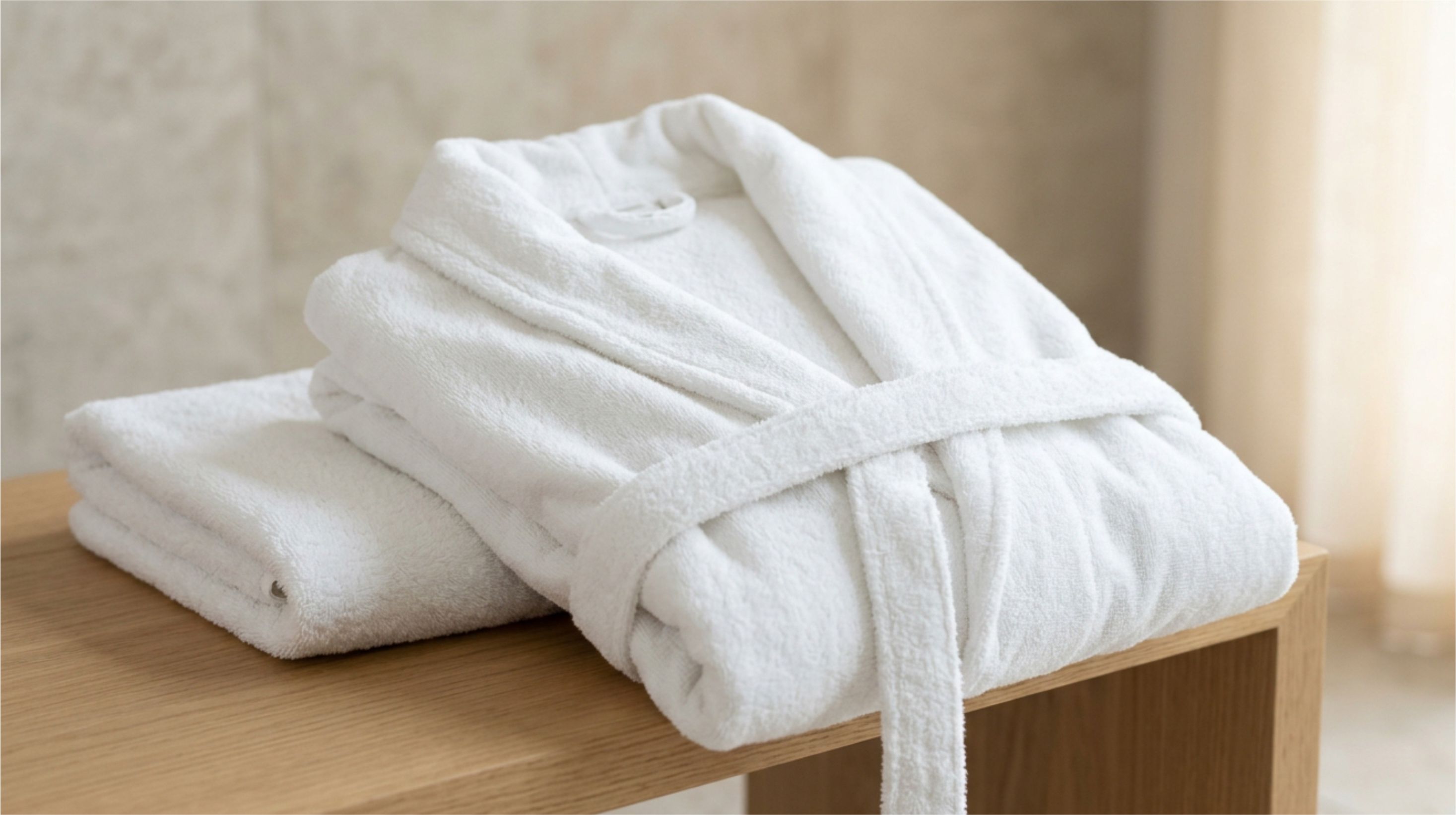
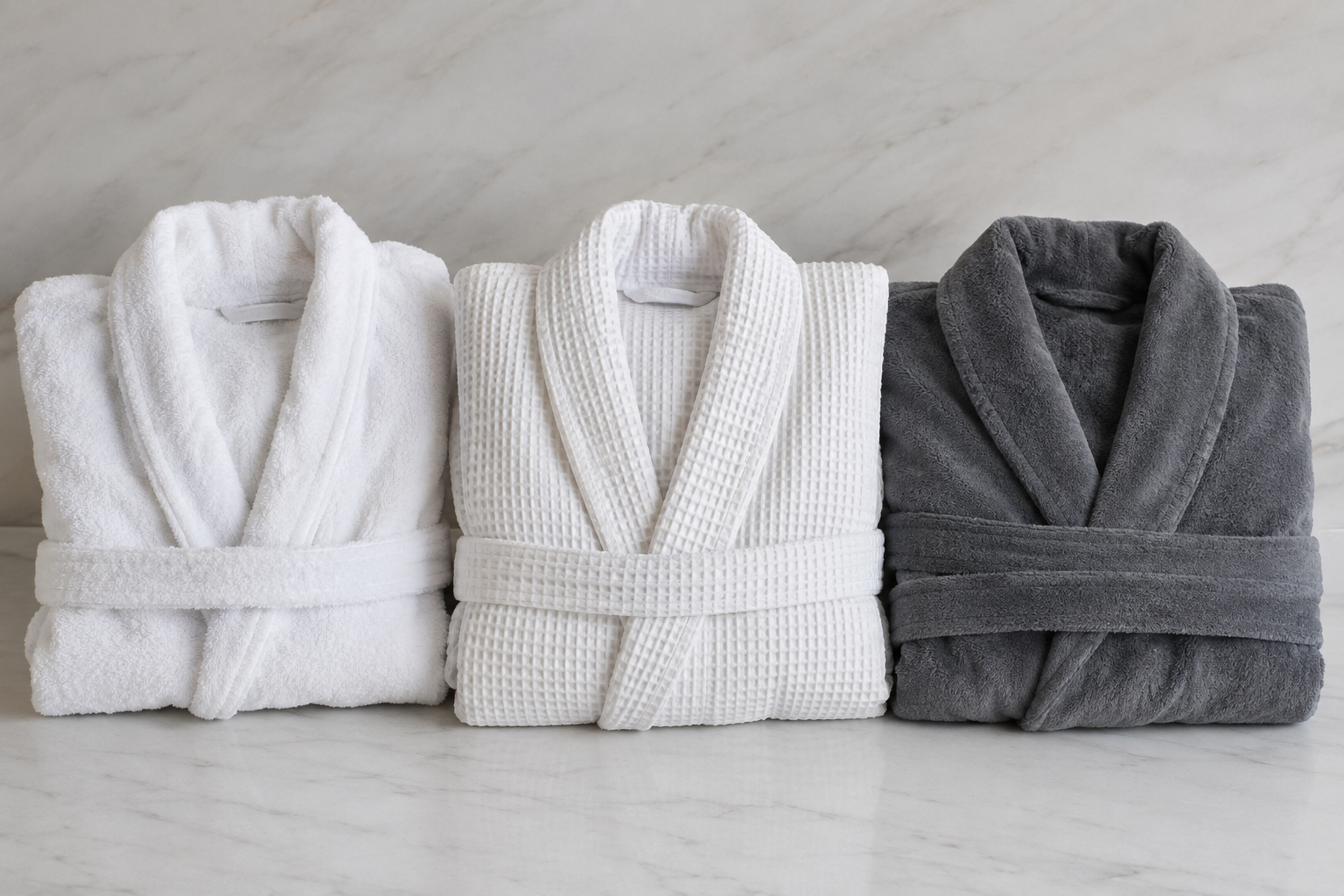
- Terry towelling - the absorbent, looped-pile fabric standard for full-service hotels. Typically 400–500 GSM. Warm, highly absorbent, slower to dry.
- Velour - a terry base with a sheared, smooth outer face. Similar GSM range to terry, reads as more "finished" and hides lint better, at a modest cost premium.
- Waffle weave - a lighter, textured weave, commonly 220–360 GSM. Breathable and quick-drying, which is why spas favor it for warm climates and poolside use.
- Microfibre - synthetic, often around 300–360 GSM. Ultra-soft hand-feel, dries fast, but doesn't match cotton terry's absorbency.
Fabric comparison at a glance
| Fabric | Typical GSM | Absorbency | Dry Time |
|---|---|---|---|
| Terry towelling | 400–500 | High | Slower |
| Velour | 400–500 | High | Slower |
| Waffle weave | 220–360 | Moderate | Fast |
| Microfibre | 300–360 | Lower than cotton | Fastest |
What certification should actually appear on a bathrobe's spec sheet?
OEKO-TEX Standard 100 tests finished textiles against more than 1,000 regulated substances, and assigns every certified product to one of four classes based on skin contact:
Examples:
- Class I — baby and toddler items up to age 3 like kids bathrobes (strictest limits).
- Class II — products with direct, prolonged, large-area skin contact: underwear, bed linen and terry products.
- Class III — products with minimal or no direct skin contact, such as outerwear.
- Class IV — decoration and furnishing textiles with no skin contact.
A bathrobe worn directly against skin for extended periods sits squarely in Class II — the same bar as underwear and bed linen, not the lighter bar that applies to jackets or curtains. When a spec sheet just says "OEKO-TEX approved" without naming a class, it's worth asking which one, since a Class III certification technically clears a lower hurdle than a bathrobe's actual use case calls for.
Shawl collar, kimono, or hooded: does style affect anything beyond looks?
Mostly it's aesthetic, with two practical exceptions:
- Shawl collar: the classic hotel silhouette. Adds fabric at the neckline, which slightly increases GSM-per-robe versus a collarless cut.
- Kimono: a flatter, lighter collar, common on waffle-weave spa robes. Suits warm-climate properties.
- Hooded: popular for spa and poolside use. The hood adds drying time versus a non-hooded robe of the same fabric, since it's an extra layer that stays damp longer.
The one operational detail most buying guides skip
Fabric and certification get most of the attention. Belts don't, and they should. Industry sources note that a meaningful share of hotel robes, commonly cited around one in five, end up pulled from rotation not because the fabric wore out, but because the belt went missing during laundering or in a guest's luggage. A $30–50 robe becomes unusable inventory over a $2–3 belt. Ordering a stock of replacement belts alongside the initial robe order, rather than after the first round goes missing, is a small line item that avoids a recurring one.
For hotel, spa, and private-label bathrobe programs, start with a specification that matches your climate, laundry process, guest positioning, and replacement plan, not just a fabric preference. Polani Textiles, a Pakistan-basedbathrobe manufacturer and exporter, supplies cotton and terry bathrobes for hotels, spas, and retail buyers, with options to discuss fabric construction, GSM, sizing, branding, and bulk-order requirements.Request a quote or sample set to compare the right robe format for your property or collection.